- Fintech websites need more than good design, they need compliance-aware messaging, visible security signals, and paths for multiple buyer types (CFO, CISO, compliance officer) evaluating the same site.
- Top picks by fit:
- Lil Big Things for early- to growth-stage fintech wanting an embedded partner from build through maintenance (Moniflo: 147% increase in active investment-wallet users)
- Flow Ninja for payments companies needing enterprise-scale embedded support (Checkout.com, Corpay)
- Finsweet for complex compliance logic and custom integrations (Vanta).
- For premium brand-and-product work, Clay (Stripe, Discover, Plaid) and Amply ($15K–$60K, Zeni, Jupiter) cover funded fintech startups needing trust-first identity and messaging.
- All agencies should be verified independently against Webflow's own partner directory before you shortlist, self-reported "Enterprise Partner" claims aren't always current.
- Pricing across verified agencies ranges from roughly $15,000 for a mid-market build to $50,000+ for premium brand-and-product engagements.
Fintech buyers evaluate differently than most B2B software buyers. A CISO wants to see security posture. A CFO wants proof the vendor won't disappear in six months. A compliance officer is reading your disclaimers before they read your headline. Your website is often the first place all three form an opinion, and a generic Webflow agency that's never designed around regulatory constraints will get that wrong.
This list is built for fintech founders and marketing leads shortlisting a Webflow partner for a build, redesign, or migration. Every agency below has verifiable fintech or finance-adjacent client work, not just a claim of "fintech experience" in their own copy.
How we selected these agencies
We prioritized agencies with named fintech clients we could independently verify (not just logos on a homepage), a confirmed Webflow partner tier checkable in Webflow's own directory, and at least one documented case study with real numbers.
We dropped a few names that show up on other "best fintech Webflow agency" lists because we couldn't verify genuine fintech-specific client work behind the claim, more on that under each entry where it's relevant.
Why trust is the whole game in fintech web design
Fintechs and neobanks are now leading on trust, a distinction that used to belong to traditional high-street banks. That shift didn't happen because fintechs have flashier logos. It happened because digital-native financial brands generally design for trust more deliberately than incumbents do.
65% of Gen Z would be willing to try an e-wallet provider, compared with just 30% of baby boomers, which tells you where the next decade of fintech customers is coming from and what they expect from a first digital impression.
That trust is fragile, though. Customer trust in US financial services firms in 2023 was relatively weak and largely unchanged from 2022, with dependability, not innovation or flash, ranking as the most important lever.
And the technology side isn't helping as much as it should. Siloed data and legacy systems continue to prevent banks from delivering the personalized experience customers now expect.
Plus, security signals matter just as much as messaging. 57% of organizations plan to increase their cybersecurity budget over the next 12 to 24 months, and on the fintech-specific side, 80% of sponsor banks say meeting compliance requirements is challenging.
None of that is abstract for a website brief: it's the reason a fintech site needs visible security posture, clear compliance language, and a design system that doesn't bury disclaimers where no one reads them.
Table of comparison: best Webflow agencies for fintech
What fintech companies need from a Webflow agency
1. Compliance-aware design, not compliance as an afterthought.
What you can't claim matters as much as what you can. Disclaimer placement, return/rate language, and CTA wording all need to survive legal review without gutting conversion, and that's a layout decision as much as a legal one.
2. Trust has to be established before the ask.
Before a visitor clicks "open an account" or "book a demo," they're quietly asking whether their financial data is safe here. Security badges, named case studies, and clear ownership information do more conversion work than a slicker CTA.
3. Multiple buyers, multiple paths.
A single "get started" button rarely works for both an individual depositor and an enterprise compliance officer evaluating the same platform. The best fintech sites route different visitors toward what they specifically need to see.
4. Integration depth.
For most fintech companies, the website isn't just marketing, it connects to CRM, KYC flows, calculators, and onboarding tools. An agency that treats Webflow as a static brochure builder will hit a wall here.
Top 8 Webflow agencies for fintech companies
1. Lil Big Things
Overview: Lil Big Things is a Webflow-first agency built for B2B SaaS and fintech marketing teams that want a hands-on partner from build through ongoing maintenance, not a project that ends at handoff.
Webflow partnership & certifications: Webflow Certified Partner.
Fintech experience & notable clients: Built Moniflo, a values-aligned investing platform, delivering a 147% increase in active investment-wallet users, a 3.8x increase in values-aligned fund selections, and a 59% rise in monthly recurring deposits. Also built Allium, a blockchain data platform.
Webflow capabilities: Webflow design and development, Figma-to-Webflow conversion, content localization (Weglot), custom-coded interactive calculators and filter systems, Webflow animations, ongoing maintenance.
What makes them stand out: A four-stage process (kickoff, design and build, launch and measure, maintain and scale) built around fintech and B2B SaaS clients specifically, rather than a generalist portfolio with a few finance logos mixed in.
Pricing: Project-based, scoped after a free consult.
2. Flow Ninja
Overview: Flow Ninja is a 65-plus person, Webflow-only agency operating as an embedded "WebOps" team rather than a project vendor.
Webflow partnership & certifications: Webflow Enterprise Partner, 2023 Webflow Enterprise Partner of the Year.
Fintech experience & notable clients: Checkout.com (global digital payments) and Corpay (corporate payments), alongside Trustly and 21.co.
Webflow capabilities: Large-scale migrations, component libraries and design systems, CMS architecture, ongoing embedded WebOps support.
What makes them stand out: Cross-functional "pods" that function as an extension of an internal marketing team, built for payments and fintech companies that publish constantly and run multiple stakeholders through approval simultaneously.
Pricing: Not publicly disclosed; third-party estimates put enterprise engagements at $25,000 and up.
3. Finsweet
Overview: Finsweet is the Webflow ecosystem's technical backbone. They’re creators of Client-First, Attributes, and Wized; more engineering studio than design agency.
Webflow partnership & certifications: Webflow Enterprise Partner, ranked among Webflow's top 10 partners globally.
Fintech experience & notable clients: Vanta, a security and compliance automation platform, which is directly relevant to fintech's compliance-heavy requirements even though Vanta itself is a SaaS company rather than a bank.
Webflow capabilities: Custom CMS architecture, API integrations, advanced Client-First implementation, technical "recovery" work on troubled builds.
What makes them stand out: When a fintech site needs something Webflow doesn't do natively, custom compliance logic, complex API connections, Finsweet is who other agencies refer that work to.
Pricing: Not published; third-party estimates put complex builds at $20,000 and up.
4. Amply
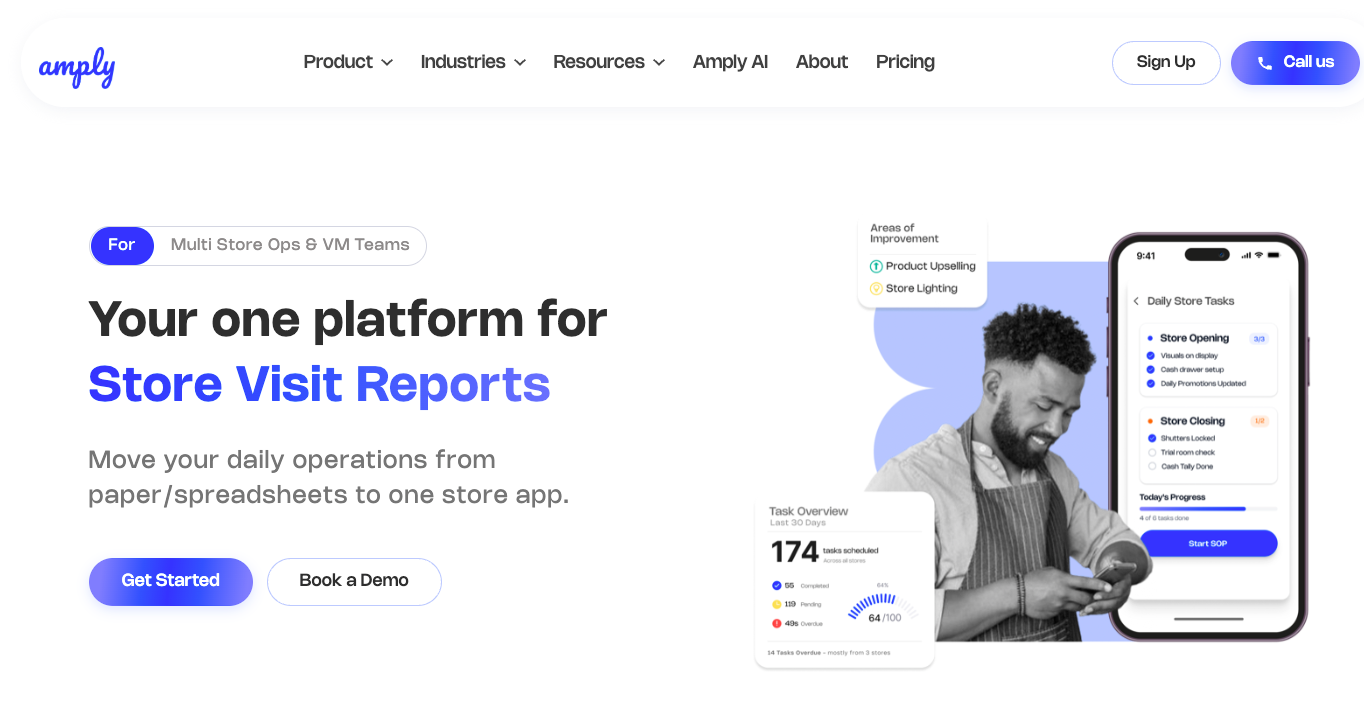
Overview: Amply is a B2B Webflow agency with a dedicated fintech practice, positioned for companies that need their site to build trust and support enterprise sales cycles at once.
Webflow partnership & certifications: Not an Enterprise Partner tier; positions itself as a Webflow specialist for B2B.
Fintech experience & notable clients: Zeni (financial operations platform), Jupiter, and BanQu, per client testimonials on Amply's own site.
Webflow capabilities: Webflow design and development, CRM integrations, conversion rate optimization, technical SEO, ongoing retainers.
What makes them stand out: A fixed five-step process (discovery, information architecture, wireframing, copywriting, final build) and a typical 3-to-4-month timeline, which gives fintech teams a predictable runway.
Pricing: $15,000 to $60,000, per Amply's own published range.
5. Clay
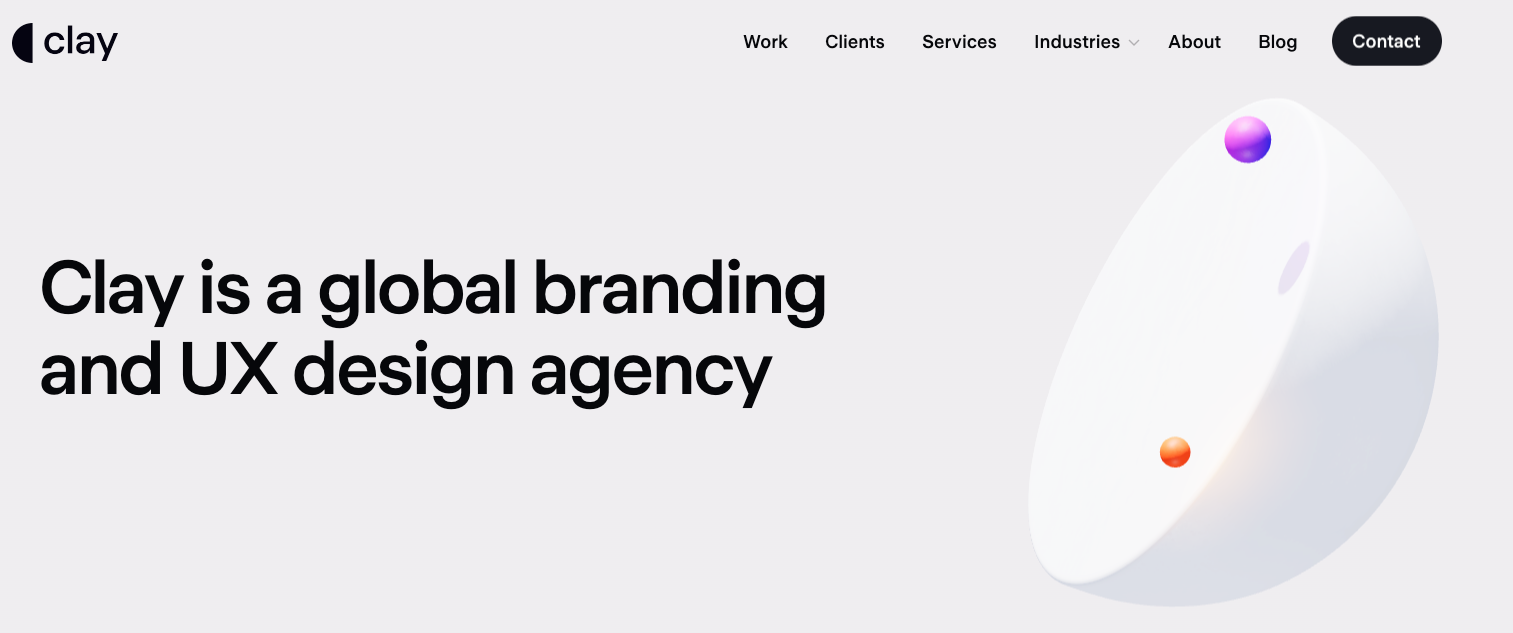
Overview: Clay is a San Francisco product and brand design studio, founded 2009, with a dedicated fintech practice and a client roster that reads like a fintech and consumer-tech who's who.
Webflow partnership & certifications: Not Webflow-exclusive; works across design systems and multiple build platforms.
Fintech experience & notable clients: Stripe, Discover, Plaid, and Grayscale, per Clay's own dedicated fintech page, plus Coinbase and Credit Karma.
Webflow capabilities: Brand identity systems, UI/UX design, design-system-driven builds, product and website design built together.
What makes them stand out: A founder-led senior team building brand and product as one system, aimed at companies at a brand inflection point rather than those needing a straightforward marketing site refresh.
Pricing: Minimum project size around $50,000.
6. Veza Digital
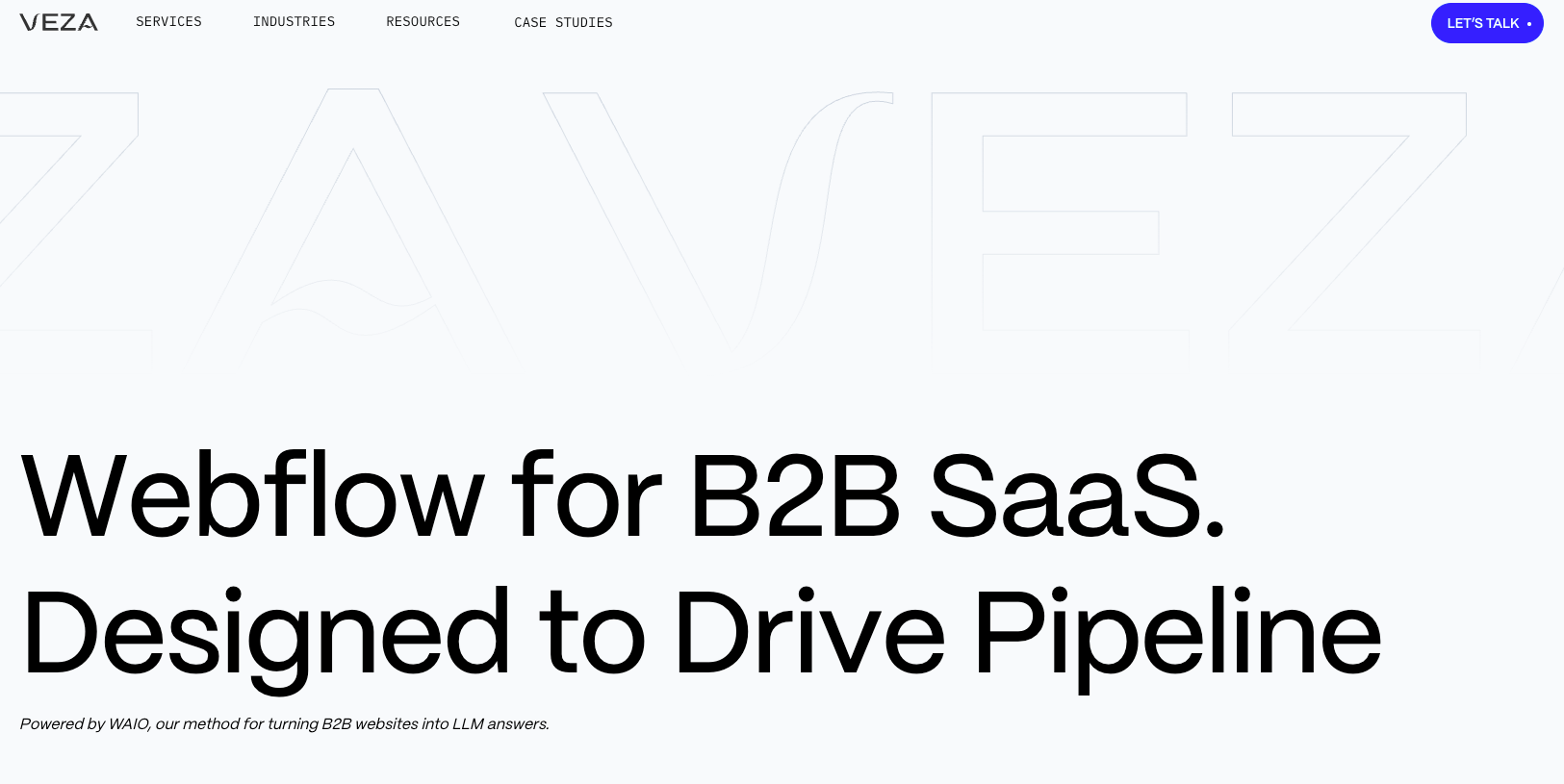
Overview: Veza Digital is a Webflow Enterprise Partner network with a dedicated fintech industry practice, built around pairing the site build with AI search visibility.
Webflow partnership & certifications: Certified Enterprise Webflow Partner.
Fintech experience & notable clients: Luno, a global crypto exchange, per a client testimonial on Veza's own site.
Webflow capabilities: Webflow design and development, CRO, AEO and technical SEO, integrations.
What makes them stand out: WAIO, their framework for structuring sites to get cited by AI answer engines, sold as a standalone $4,500 audit before any build commitment. Veza also claims its 90-day launch framework has generated over $25 million in client sales, a figure we could not independently verify beyond Veza's own site.
Pricing: $4,500 for a standalone AI Search Visibility Audit; full project pricing quoted on a call.
7. Refokus
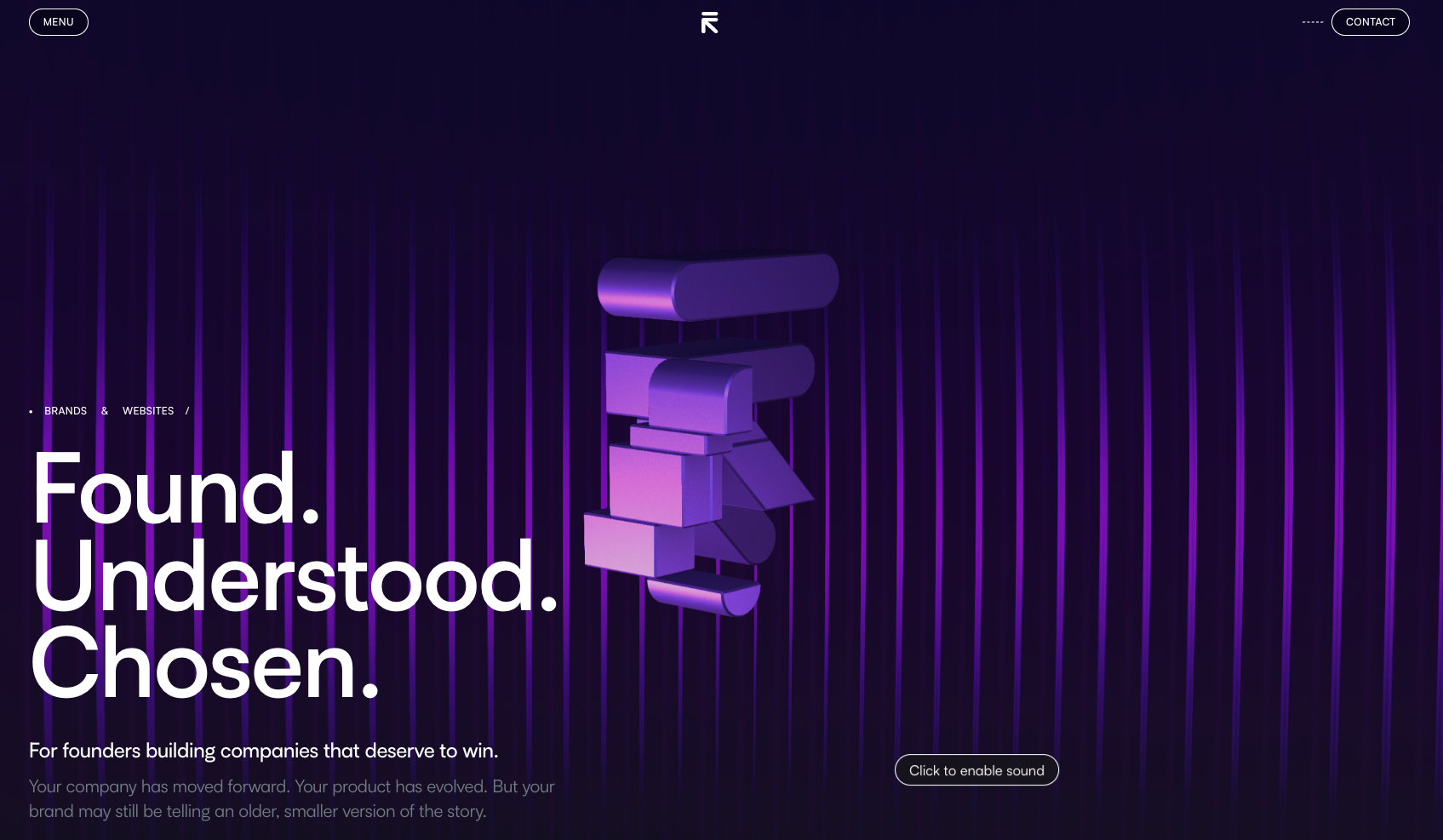
Overview: Refokus is an engineering-led Webflow studio known for immersive, motion-heavy builds, achieving Enterprise Partner status just three months after founding in 2021.
Webflow partnership & certifications: Webflow Enterprise Partner.
Fintech experience & notable clients: Chargeflow, a chargeback automation platform for ecommerce and fintech businesses.
Webflow capabilities: Advanced animation (WebGL, GSAP), enterprise migrations, custom integrations.
What makes them stand out: Development is engineering-led rather than design-led, useful for fintech products with genuinely complex workflows to visualize rather than simple static explainer copy.
Pricing: Not publicly disclosed; custom quotes only.
8. Superside
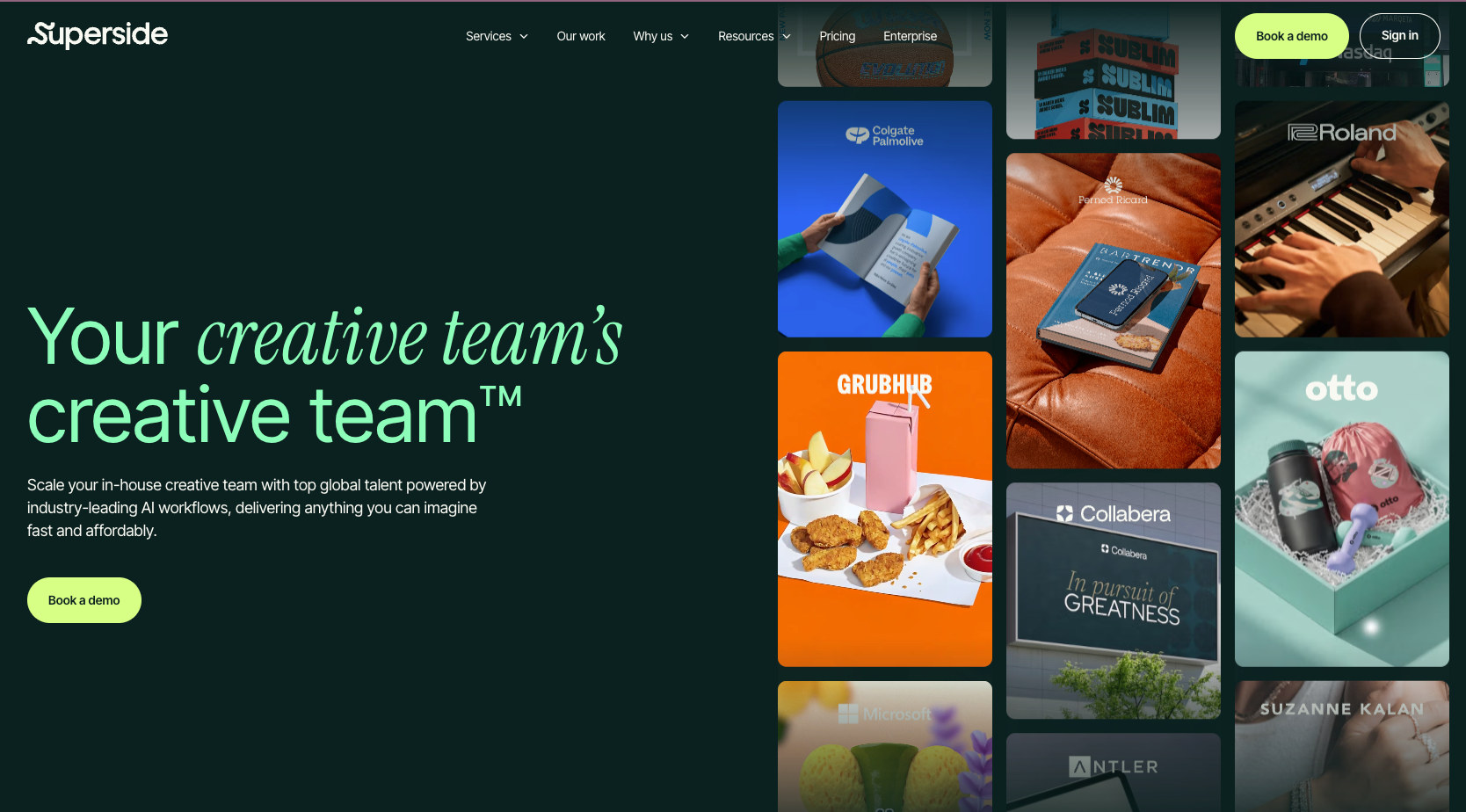
Overview: Superside is a creative-as-a-service subscription platform blending human and AI-assisted design work, positioned as a fractional design team rather than a project agency.
Webflow partnership & certifications: Not a Webflow-specific agency; Webflow is one of several platforms they build on.
Fintech experience & notable clients: Cites Coinbase, Robinhood, and Marqeta as clients in third-party coverage; we could not independently verify these through Superside's own case studies, so treat this as unconfirmed until you ask for named references directly.
Webflow capabilities: Website design, landing pages, design systems, UX/UI audits.
What makes them stand out: A predictable monthly subscription instead of project-based invoicing, useful for fintech marketing teams with a constant stream of smaller requests rather than one big build.
Pricing: Subscription-based; not publicly disclosed.
What makes a great Webflow agency for fintech?
Beyond a portfolio, look for an agency that treats compliance as a design input rather than a legal afterthought, that has at least one fintech case study with real, named outcomes, and that can explain how they'd structure a site for more than one type of buyer. An agency that's never had to write around a compliance team's redlines will design a beautiful site that legal sends back three times before launch.
Questions to ask before hiring a fintech Webflow agency
- Can you show a fintech or regulated-industry project with a named client and a measurable outcome?
- How do you handle compliance-driven copy constraints without gutting the conversion path?
- What's your process for routing different buyer types (individual users vs. enterprise compliance teams) to different content?
- How do you structure the CMS so marketing can publish without legal risk on every change?
- What's your Webflow partner tier, and can I verify it in Webflow's own directory?
- What happens after launch, is there a retainer, or does the relationship end at handoff?
Trust is a design decision, not just a feature
Every agency on this list solves the same underlying problem: fintech buyers don't convert on polish, they convert on proof that they can trust you with something that matters to them. The agencies that get invited back for a second project are the ones that treated compliance, security signals, and multi-stakeholder buying as core design decisions from day one, not a legal review tacked on at the end.
That's actually good news. It means the fix isn't a mystery. Shortlist two or three agencies based on where your company sits today, ask for named references with real numbers behind them, and verify their Webflow tier yourself before anything gets signed. Get that part right, and the rest, the design, the launch, the growth, tends to follow.
If you want to see this approach play out on a real fintech build, our Moniflo case study walks through the full rebuild, from the trust-first messaging decisions down to the results. And if fintech is one of a few verticals you're weighing, our broader look at the US Webflow agency market is a good next stop. Either way, a great fintech website isn't the one that looks the most impressive, it's the one your hardest-to-convince buyer trusts by the time they hit "get started."
Frequently Asked Questions
A generalist can build a functional site, but fintech sites carry compliance, security-signal, and multi-stakeholder-buyer requirements that a specialist agency will already have solved for. Ask for a named fintech or regulated-industry case study before assuming general Webflow experience transfers.
Yes, for the marketing layer. Webflow provides standard SSL, hosting security, and DDoS protection sufficient for a marketing site. Sensitive financial data and transactions should run through your secured backend systems, not through Webflow itself.
Based on the agencies above, published or estimated ranges run from around $15,000 for a mid-market build up to $50,000+ for a premium brand-and-product engagement, with enterprise migrations often exceeding that.
Certified and Premium are Webflow's core partner tiers. Enterprise is a distinction layered on top of either for agencies proven on larger, more complex builds, staged environments, and advanced workflows, relevant for fintech companies with compliance-driven technical requirements.
Ideally yes. Bringing compliance in during discovery, rather than as a final review gate, avoids late-stage rewrites of headlines, CTAs, and disclaimer placement that can otherwise delay launch by weeks.